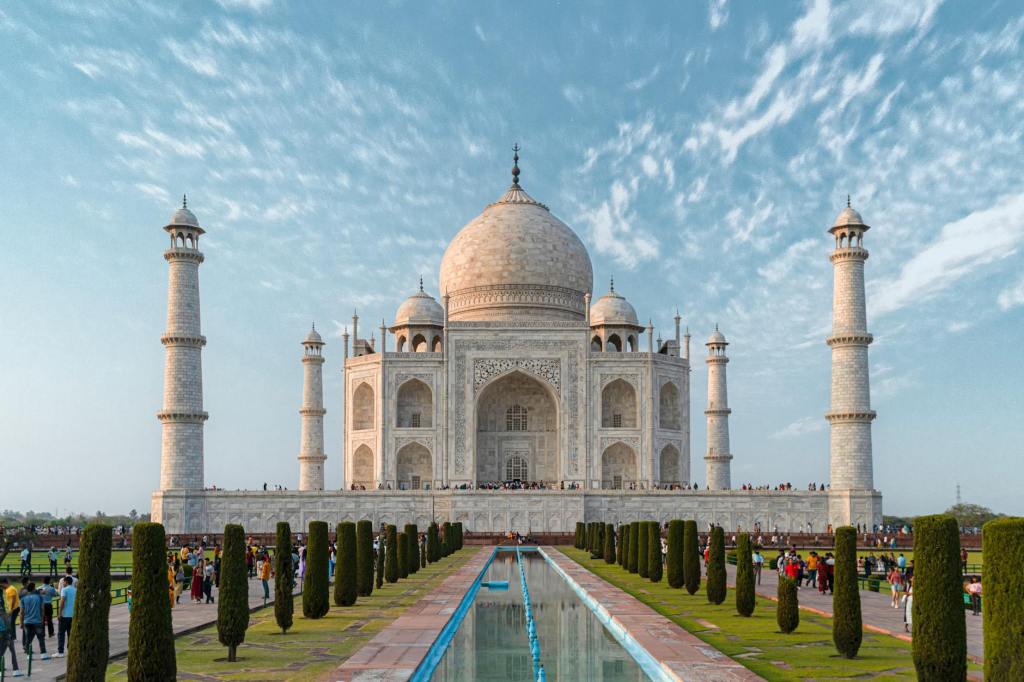
The Indian Subcontinent is located in South Asia consisting of India, Nepal, Bangladesh, Pakistan, Bhutan, Sri Lanka, and the Maldives. This article’s focus will be on the four biggest and most populated, India, Pakistan, Bangladesh, and Sri Lanka. The diverse melting pot making up the region’s population houses around 1.7 billion people and is home to a rich history. Some of the world’s oldest religions, languages, and cultures lie within this region’s borders.
The earliest known borders of the Indian subcontinent were established during the Indus Valley Civilization, which lasted from 3300 BCE to 1300 BCE. The civilization was centered around the Indus River which flows through modern-day Pakistan and India. But after the civilization’s collapse due to the Ice Age, the Maurya Empire rose to power in the 3rd century BCE under Emperor Ashoka — one of the most powerful and well-known emperors in history. At its height, the Maurya Empire’s borders included parts of modern-day Afghanistan, Iran, and Central Asia, making it one of the largest empires in the world. After the Maurya Empire ended, a series of dynasties were established, including the Gupta and Mughal Empires, which ruled over the Indian subcontinent for centuries. Later, during European colonization, the British East India Company was created, and soon came British rule over India, known as the British Raj. They divided the subcontinent into many provinces and states governed by British officials, while also establishing princely states with native rulers who were loyal to the British.
After India gained independence from the British in 1947, its borders underwent changes once again. The two main religions of the subcontinent, Hinduism and Islam, were the root of the British partitions of East and West Pakistan and India. Although Muslims overwhelmingly lived in East and West Pakistan and Hindus overwhelmingly lived in India, there were still millions of people who were displaced due to the lackluster partition efforts. This led to mass violence and lengthy problems lasting decades. There are many modern-day disputes between the two countries, and be sure to check out my previous article on the region’s dispute over the state of Jammu and Kashmir. The borders of the Indian subcontinent were further redefined in 1971 when East Pakistan declared independence from West Pakistan and became known as Bangladesh, leading to the Bangladesh Liberation War and eventually the sovereignty of Bangladesh. Sri Lanka would end up rebelling against British rule following the rest of its neighbors. The Kandyan Wars and the Matale Rebellion both contributed to its effort. In 1948, it became a Dominion of the British Empire and finally became a republic in 1972.


 All Things Geography
Leave a comment